
In these examples, the contribution margin per unit was calculated in dollars per unit, but another way to calculate contribution margin is as a ratio (percentage). Instead, management needs to keep a certain minimum staffing in the production area, which does not vary for lower production volumes. A contribution margin income statement is an income contribution margin income statement format statement in which all variable expenses are deducted from sales to arrive at a contribution margin. Then, all fixed expenses are subtracted to arrive at the net profit or net loss for the period.
Understanding the Impact of Variable Costs

Fixed cost refers to all costs incurred by the company that does not change with the company’s level of output, i.e., they remain constant regardless of the company’s level of output. Variable cost refers to all costs incurred by the company that change with the change in the level of output of the company, i.e., it increases with an increase in output and decreases with a decrease in output. When you calculate your contribution margin and break-even point, be sure to use units or value consistently unless you are comfortable converting them back and forth.
How to determine the contribution margin
Thus, the arrangement of expenses in the income statement corresponds to the nature of the expenses. The contribution margin income statement separates the fixed and variables costs on the face of the income statement. This highlights the margin and helps illustrate where a company’s expenses. Variable expenses can be compared year over year to establish a trend and show how profits are affected. A contribution income statement is a powerful tool in accounting and finance, providing valuable insights into a company’s financial performance.
Contribution Income Statement: A Comprehensive Guide
The contribution margin formula is calculated by subtracting total variable costs from net sales revenue. The fixed production costs were $3,000, and fixed gross vs net selling and administrative costs were $50,000. Variable production costs were $1,000 per unit, and variable selling and administrative costs were $500 per unit. Contribution margin income statements refer to the statement which shows the amount of contribution arrived after deducting all the expenses that are variable from the total revenue amount. Then, further fixed expenses are deducted from the contribution to get the net profit/loss of the business entity. While the contribution margin shows what’s left after variable costs, net income (or profit) considers all fixed and non-operating expenses.
Contribution Income Statement Example
- This difference in application is similar to cost accounting in one important way.
- When you calculate your contribution margin and break-even point, be sure to use units or value consistently unless you are comfortable converting them back and forth.
- In our example, if the students sold \(100\) shirts, assuming an individual variable cost per shirt of \(\$10\), the total variable costs would be \(\$1,000\) (\(100 × \$10\)).
- Variable costs are not typically reported on general purpose financial statements as a separate category.
- COG includes the costs directly tied to making a product or providing a service.
- The resulting value is sometimes referred to as operating income or net income.
- We will discuss how to use the concepts of fixed and variable costs and their relationship to profit to determine the sales needed to break even or to reach a desired profit.
This is a loss, so you’d have law firm chart of accounts to figure out how to compensate for the -$50,000 by increasing sales or decreasing fixed costs. For that, you’ll need a tool that automates data collection, accurately calculates financial insights, and produces customizable reports. Request a free demo and see how Cube can help you save time with all your contribution margin income statements, reports, analysis, and planning. A contribution margin income statement is a document that tallies all of a company’s products and varying contribution margins together, helping leaders understand whether the company is profitable. It’s a useful tool for making decisions on pricing, production, and anything else that could improve profitability. If you’re serious about safeguarding your business’s finances, you need to get into the granular details of your profitability—and that means producing quality contribution margin income statements.

Think of the contribution margin as a snapshot of product profitability, while net income is the broader picture of overall financial health. In the simplest terms, the contribution margin is the amount left over after deducting variable costs from revenue. This figure reveals how much is left to cover fixed expenses and contribute to profit. Last month, Alta Production, Inc., sold its product for $2,500 per unit.

Analyzing Net Profit Margin
- In fact, Coca Cola’s assembly line only requires one employee to run the filling station that fills more than 2,000 soda cans a minute.
- This number is super important because it helps businesses decide which products are worth selling more of and which might be losing money.
- You can’t directly calculate the contribution margin from the EBIT figure, without a breakdown of the fixed and variable costs for each product or service.
- It considers the sales revenue of a product minus the variable costs (i.e., costs that change depending on how much you sell), like materials and sales commissions.
- Revenue is the total sales made by the company during the period through the sale of goods or the provision of services to the company’s customers.
- This gives a much more detailed financial picture of the business’s operating costs and how well the products perform.
- Converted into a percentage, this leaves the beauty company with a 44% contribution margin on its skincare product.
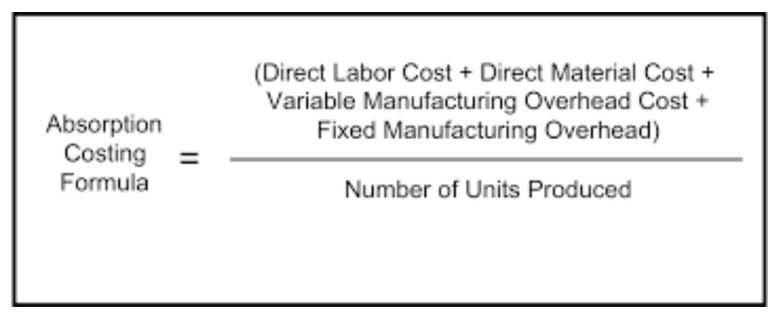
Because of limited resources, the new product can only be manufactured if one of the existing products is dropped. A traditional income statement is prepared under a traditional absorption costing (full costing) system and is used by both external parties and internal management. This means that the production of grapple grommets produce enough revenue to cover the fixed costs and still leave Casey with a profit of $45,000 at the end of the year.